Reading Time: mins
If you’ve been dealing with reflux, you may have been offered medication or even surgery fairly quickly. What’s less common is firstly having someone measure what your oesophagus is actually doing. Expert guidelines advise testing for all patients who are planning to have surgery for reflux, or for whom anti-acid therapies fail, however this step is sometimes skipped which can then lead to patients being offered medical or surgical therapy that doesn’t suit them. Oesophageal testing gives great information to allow treatment of the real problem rather than making an educated guess.
Reflux isn’t a single condition with a single fix. Manometry and Acid (reflux) testing is a big part of how we work out which treatment will genuinely help you, and it’s central to what we do here.
In this article, we cover:
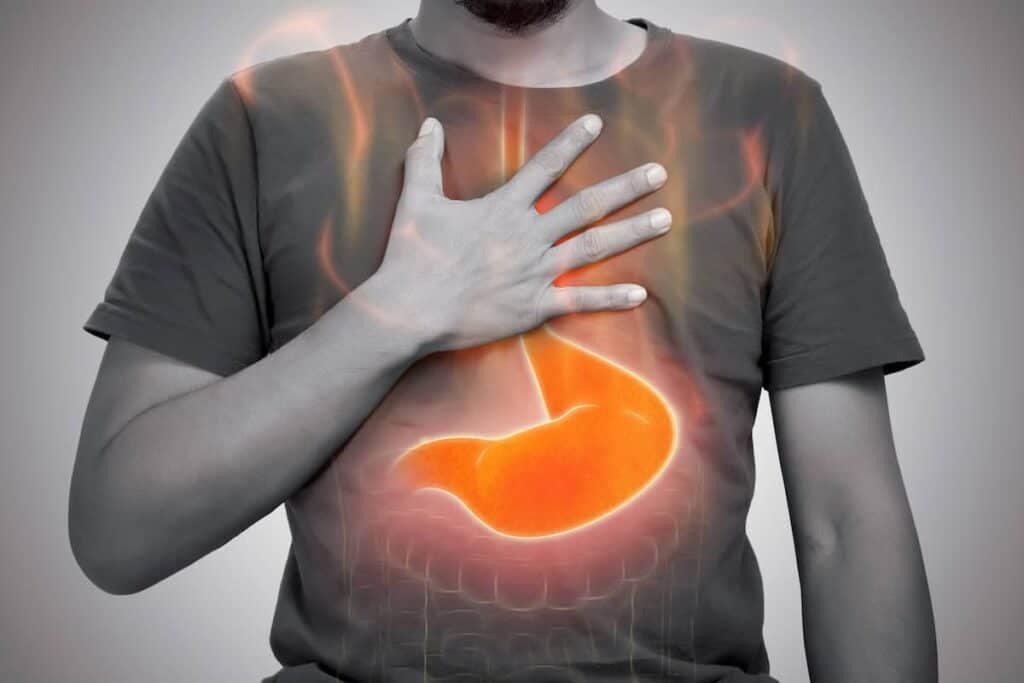
There are two types of testing – manometry or swallow testing, and reflux or oesophageal acid testing.
Oesophageal manometry is a test that measures how the muscles of your oesophagus work. The oesophagus isn’t just a passive tube. It’s a muscular one that squeezes in a coordinated wave to move food down to your stomach, with a valve at the bottom (the lower oesophageal sphincter) that opens to let food through and closes to keep acid down.
Manometry measures how well that valve and those muscles are working: how strong the squeeze is, how well it’s coordinated, and whether the valve relaxes and closes properly. It’s usually done alongside other reflux tests like endoscopy and pH monitoring, each of which looks at a different piece of the puzzle. It’s the only test that can reliably diagnose conditions where patients have difficulty swallowing, pain with swallowing, and conditions such as Achalasia.
Reflux testing measures how much acid makes it into someone’s oesophagus. We can measure strong acid and weak acid reflux over 1, 2 or 4 days. What we want to know with these tests is how much acid someone is exposed to, and whether their symptoms are triggered by reflux events.
Two things in particular.
How is the valve working? A weak or poorly relaxing lower oesophageal sphincter is a common driver of reflux, and manometry measures its function directly.
How well the oesophagus moves. It shows whether the muscular waves that push food down are strong and coordinated, or weak and ineffective. This matters more than most people expect because it directly affects which treatment is safe and sensible.
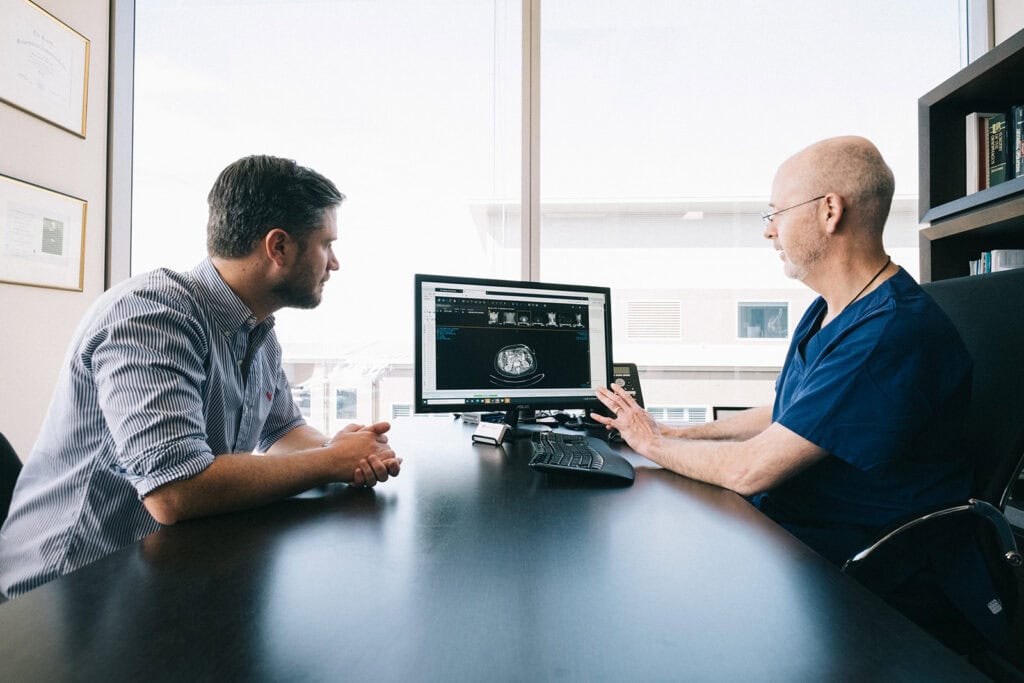
This is where the test really earns its place.
Reflux surgery works by tightening the barrier between the stomach and oesophagus. If the oesophageal muscle is strong, that’s usually fine. But if the muscle is weak and the barrier is tightened too much, food can start to get stuck, leaving you with difficulty swallowing instead of reflux. Manometry lets the surgeon see this in advance and adjust the operation to suit your oesophagus, rather than applying the same repair to everyone.
It also catches conditions that can masquerade as reflux. Some people who think they have stubborn reflux actually have a muscle disorder such as achalasia, where the oesophagus doesn’t empty properly. That needs a completely different treatment, and standard reflux surgery would make it worse. Manometry is how that gets picked up before anything irreversible happens. You can read more about these conditions on our swallowing disorders page.
In short, manometry is what turns reflux treatment from a one-size-fits-all approach into one tailored to you.

It’s a straightforward day test, done while you’re awake. A very thin, flexible tube is passed through your nose and down into your oesophagus. You then take small sips of water while the sensors record how your oesophagus responds to each swallow.
It’s a little uncomfortable as the tube goes down and can make your eyes water briefly, but it isn’t painful, and most people find it much easier than they expected. The whole thing usually takes around twenty to thirty minutes, and you can drive yourself home and get on with your day afterwards.
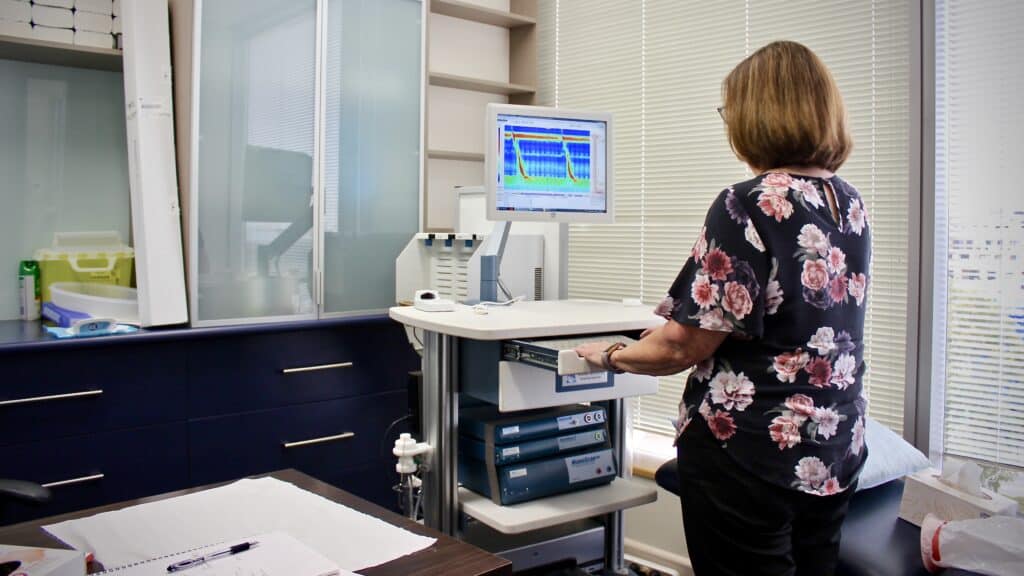
There are a couple of different options. One is to use a narrow catheter, about ¼ the size of the manometry testing tube to measure reflux. This thin, flexible tube is passed through your nose and down into your oesophagus, is taped to the side of your face and connected to a monitor that measures acid and fluid over 24 hours, or even up to 48 hours if that is the preference. We ask patients over that 24 hour period to press a button when they eat and when they get symptoms. This allows us to correlate their symptoms with what we are measuring.
The other option is to perform a gastroscopy procedure, and at the time to place a tiny Bluetooth-enabled acid measuring capsule, a “Bravo™” device which records acid in the oesophagus over 4 days.
Detailed reflux testing isn’t offered everywhere, and it’s one of the things that sets our practice apart. We’ve run one of NSW’s longest-established oesophageal physiology labs since 2008, using high-resolution manometry to build a genuinely detailed picture of how your oesophagus works.
That depth of testing is what allows us to match the treatment to the actual problem, whether that’s optimised medication, an endoscopic option, or surgery tailored to your anatomy. It’s the difference between treating reflux by assumption and treating it by evidence.
If reflux is affecting your life, or you’ve been told you might need surgery, it’s worth having the right tests before any decisions are made. Learn more about reflux testing and treatment, or contact us to arrange an appointment.
Contact us to discuss symptoms, timing and the best treatment plan for you.

P: 02 9553 1120
F: 02 9553 7526
E: info@uppergisurgery.com.au

Copyright © 2026. Upper GI Surgery. All rights reserved.